
From the Maker’s Bench
Insights from our network of 3d print operators and designers.
The right camera depends on what runs your printer, not on megapixels. If you own a Bambu Lab printer, you already have one. If you run Klipper or OctoPrint on a Raspberry Pi, a Logitech C920 or a Pi Camera Module 3 is the standing pick. If your printer is a recent Creality, Anycubic or Flashforge, buy that brand’s plug-in camera. And if you just want to glance at a print from your phone, a Wi-Fi security camera does the job. That’s what we use on our big open-frame printer.
| Pick | Camera | Why | |
|---|---|---|---|
| Best USB webcam (Klipper, OctoPrint) | Logitech C920 | 1080p at 30 fps, autofocus, plugs into a Pi or PC | Check price |
| Best for a Raspberry Pi | Pi Camera Module 3 (Arducam) | 12 MP autofocus on a ribbon cable, no USB needed | Check price |
| Best Wi-Fi camera | TP-Link Tapo C110 | 2K, night vision, microSD, streams to Obico | Check price |
| What we use to watch a print | Blink Mini 2K+ | Plug in, open the app, done | Check price |
| Best for Creality Ender-3 V3 / Nebula Pad | Creality Nebula Camera | Night vision, time-lapse and spaghetti detection in Creality Cloud | Check price |
| Best for Creality K1 series | Creality K1 AI Camera | Plugs into the K1’s reserved port, pauses failed prints | Check price |
| Best for Anycubic Kobra | Anycubic Kobra 3 camera | Plug in, watch in the Anycubic app, time-lapse | Check price |
| Best for Flashforge AD5M / AD5X | Flashforge camera kit | Flash Maker app monitoring | Check price |
| Already built in | Bambu Lab A1, P1, X1 | Live view and time-lapse; the X1’s is the good one | Bambu Lab A1 |
Rather not babysit a print at all? Have one of our makers print it and ship it to you.
Start here. Most camera disappointments come from buying a camera the printer cannot talk to.
| Your printer | Buy this | Why |
|---|---|---|
| Bambu Lab A1, A1 mini, P1S, P1P | Nothing, or a Raspberry Pi plus a webcam if you want a smooth stream | The built-in camera streams about one frame a second. Time-lapse works very well; live view is a slideshow. |
| Bambu Lab X1 series (production ended March 2026) | Nothing | 1080p at 30 fps plus lidar failure detection, built in |
| Creality Ender-3 V3, V3 KE, V3 Plus, CR-10 SE, or a Nebula Pad / Sonic Pad | Creality Nebula Camera | The only camera the pad recognizes |
| Creality K1, K1 Max, K1C, K1 SE | Creality K1 AI Camera | Plugs into the reserved port, works in Creality Cloud |
| Anycubic Kobra 2 or Kobra 3 series | Anycubic Kobra 3 camera | Plugs into the printer’s USB, works in the Anycubic app |
| Flashforge Adventurer 5M, 5M Pro, AD5X | Flashforge camera kit | Made for the mount and the Flash Maker app |
| Any printer running Klipper or OctoPrint on a Raspberry Pi | Logitech C920 or Pi Camera Module 3 | Both are supported out of the box by Crowsnest, Mainsail, Fluidd and OctoPrint |
| Anything else: older Enders, Neptunes, a Prusa Mini, resin printers | A Wi-Fi camera: Tapo C110 or Blink Mini 2K+ | No integration needed. Point it at the nozzle and watch from your phone |
Still choosing the printer? Several picks in our best printers under $300 guide have a camera port or a camera built in, and our ABS printer guide covers the enclosed machines that ship with one.
Three things: catching a failure before it wastes a spool, checking the first layer without walking over, and time-lapses. It does not fix anything. A camera shows you a bad first layer sooner; it does not level the bed.
On our ELEGOO Neptune 4 Max, the failure we watch for is the Blob of Death: filament escapes around the nozzle, builds up on the hotend, and wrecks the print head assembly if nobody stops the print. A cheap Blink Mini pointed at the nozzle lets us catch it from the phone before it does damage. That is the whole case for a camera on a printer that doesn’t ship with one.
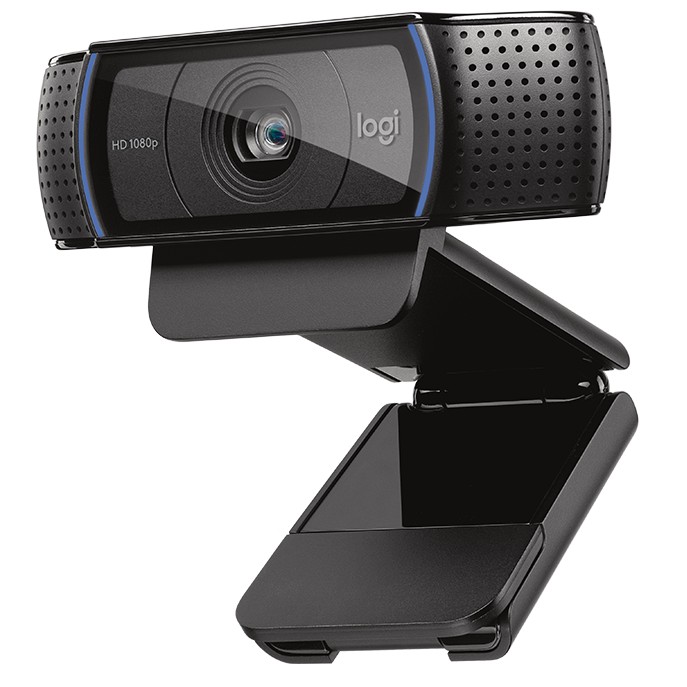
Who it’s for: anyone running a Raspberry Pi or a PC next to the printer. It has been the default printer webcam for a decade for a reason.
What you get: Full HD 1080p at 30 fps, autofocus, automatic low-light correction and a glass lens. It is a plain USB camera, so Crowsnest, OctoPrint and Obico all see it without drivers. The C920x is the same camera with a newer part number.
Skip it if: you want night vision or a camera that works without a computer. It needs a USB host.
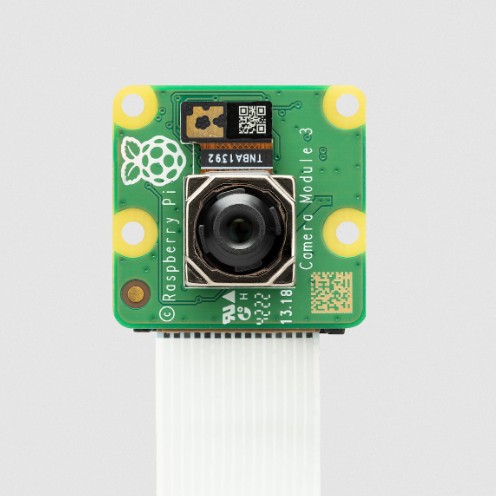
Who it’s for: Klipper or OctoPrint on a Raspberry Pi where you want the camera on a short ribbon cable instead of a USB lead.
What you get: a 12 MP Sony IMX708 sensor with phase-detect autofocus and HDR, 1080p video, on a CSI ribbon that leaves the USB ports free. The Arducam version is in stock when the official module is not; Arducam notes it needs a small configuration change compared with the official one. A Wide version covers a big bed from close up.
Skip it if: you have no Raspberry Pi. On its own this is a bare board.
Who it’s for: watching any printer from your phone with no wiring to the printer at all.
What you get: 2K video, night vision to about 30 feet, two-way audio, motion alerts and local recording to a microSD card up to 512 GB, no subscription needed. It also offers an RTSP stream, which is what lets Obico or OctoPrint use it as a printer camera.
Skip it if: you want the feed on your printer’s screen or in its slicer. A security camera lives in its own app.
Who it’s for: the simplest possible setup. We run a Blink Mini on our Neptune 4 Max for exactly this.
What you get: a plug-in camera with 2K video, up to 4x zoom, night vision, motion alerts and two-way audio, set up in the Blink app in minutes. The Mini 2K+ is the current, third-generation version of the Mini we run. Live view works without a plan in short sessions; long sessions, saved clips and person alerts need a Blink subscription, or a Sync Module for local storage.
Skip it if: you want AI failure detection or recording without a subscription. For that, the Tapo above.

Who it’s for: Ender-3 V3, V3 KE, V3 Plus and CR-10 SE owners, and anyone running a Nebula Pad or Sonic Pad.
What you get: a USB camera with 1080p video, infrared night vision that switches on by itself, manual focus, time-lapse, and spaghetti detection through Creality Cloud. Plug it into the pad’s USB port and it shows up.
Skip it if: your printer is not on that list. Creality is clear that this camera is for Creality’s own pads and V3 printers, and reviewers call the compatibility list its biggest limitation.

Who it’s for: K1, K1 Max, K1C and K1 SE owners whose printer shipped without the camera.
What you get: live view in Creality Cloud or Creality Print, failure detection that pauses the print, and automatic time-lapses. It plugs into the reserved interface inside the printer. Detecting foreign objects on the bed needs the separate lidar.
Skip it if: you have any other printer. It only fits the K1 family.

Who it’s for: Kobra 3, Kobra 3 Combo, Kobra 3 Max and Kobra 2 series owners.
What you get: a USB camera for live view and time-lapse in the Anycubic app, with a replaceable printed frame. Anycubic lists it as working with Klipper printers and computers too.
Skip it if: you want it integrated with anything other than the Anycubic app.

Who it’s for: Flashforge owners who want monitoring in the Flash Maker app.
What you get: a plug-and-play HD camera kit made for the Adventurer 5M series mount, with live view and alerts on your phone.
Skip it if: your printer is not a Flashforge.
Every Bambu printer ships with a camera. On the A1, A1 mini and P1 it is a “low rate” camera: about one frame a second in live view, which is fine for checking a print and useless for watching it move. Time-lapse works very well on them; that is what we use ours for. The X1 series has a 1080p, 30 fps camera plus lidar, and its failure detection pauses the print on its own. If you want a smooth live stream on a P1 or A1, the fix is a Raspberry Pi with a USB webcam like the C920 and OctoEverywhere or Obico. Still choosing a printer? Bambu Lab’s official Amazon store sells the A1 and the P2S Combo; the P2S camera streams 1080p at 30 fps, so the low-frame-rate problem is gone on that model.
Any camera can feed a failure detector. What matters is which software your printer can run.
| Tool | Camera it needs | Printers | Cost |
|---|---|---|---|
| Obico | Any USB webcam, Pi camera or RTSP Wi-Fi camera | OctoPrint, Klipper, Bambu Lab | Free tier; paid plan for more streaming |
| OctoEverywhere Gadget | Any webcam the Pi can see | OctoPrint, Klipper | Free tier |
| Creality Cloud | Nebula Camera or K1 AI Camera | Creality | Included |
| Bambu Lab | Built in | X1 (lidar + camera); P1 and A1 limited | Included |
Set expectations: detection pauses a print, it does not rescue one. Check the first layer yourself, then let the software watch the rest.
Mounting: zip-tie it to the frame or print a mount, keep it off the moving gantry, and make sure it sees the whole plate and the nozzle. A camera that only shows the back corner will miss the failure you bought it for.
Already own a printer and a camera? Our makers earn money printing Intagly customers’ orders. See how to earn with yours.
Whatever your printer can control: the built-in camera on a Bambu, the Nebula or K1 camera on a Creality, or a Logitech C920 on a Klipper or OctoPrint machine. Parking the toolhead between frames matters more than the camera.
USB if a Raspberry Pi or PC runs the printer, because the stream integrates with your printer software. Wi-Fi if you only want to look at the print from your phone.
The camera does not; the software does. Obico and OctoEverywhere watch any webcam, Creality Cloud watches Creality’s cameras, and Bambu’s X1 does it on its own.
Yes. A webcam needs a USB host (a Pi or PC). A security camera works on its own in its app, and if it offers an RTSP stream, like the Tapo C110 or a Wyze Cam v3 with the RTSP firmware, Obico can use it too.
Each brand sells a plug-in camera for its own printers: Anycubic’s Kobra 3 camera and Flashforge’s Adventurer 5M/AD5X camera kit. Both set up in the brand’s app.
No. They all have one. The P1 and A1 cameras are slow for live view but fine for time-lapse; the X1 camera is full speed.
The Creality Nebula Camera. It plugs into the Nebula Pad and adds night vision, time-lapse and spaghetti detection.
| Pick | Camera | |
|---|---|---|
| Best USB webcam | Logitech C920 | Check price |
| Best for a Raspberry Pi | Pi Camera Module 3 (Arducam) | Check price |
| Best Wi-Fi camera | TP-Link Tapo C110 | Check price |
| What we use | Blink Mini 2K+ | Check price |
| Creality Ender-3 V3 / Nebula Pad | Creality Nebula Camera | Check price |
| Creality K1 series | Creality K1 AI Camera | Check price |
| Anycubic Kobra | Anycubic Kobra 3 camera | Check price |
| Flashforge AD5M / AD5X | Flashforge camera kit | Check price |
| Bambu Lab | Built in | Bambu Lab A1 |
Want the parts without the printer or the camera? Get an instant quote from our makers.
*Some links in this guide are Amazon affiliate links. As an Amazon Associate, Intagly earns from qualifying purchases, at no extra cost to you.